Orthodontic Treatment
Invisalign® Clear Aligners
A clinically proven orthodontic system that straightens your teeth using a custom series of transparent, removable aligners — with no metal brackets, no wires, and no disruption to your daily life.
The Technology
What Is Invisalign®?
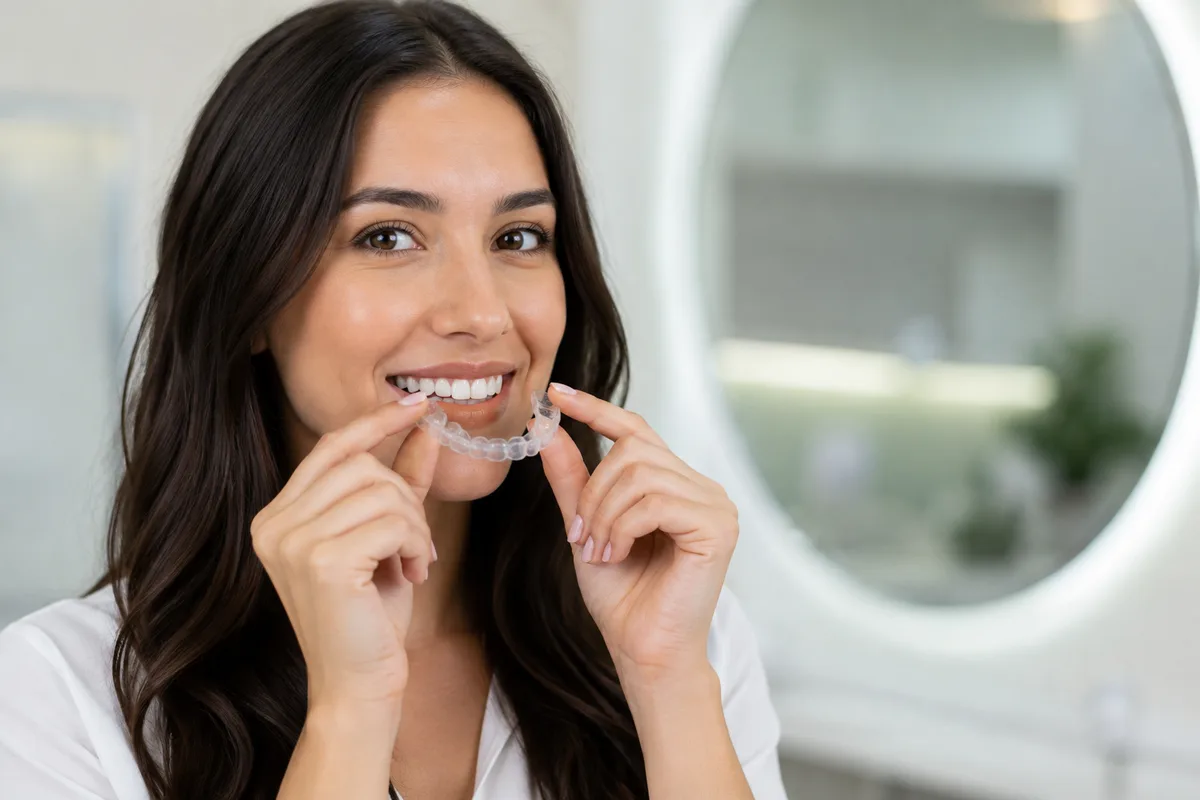
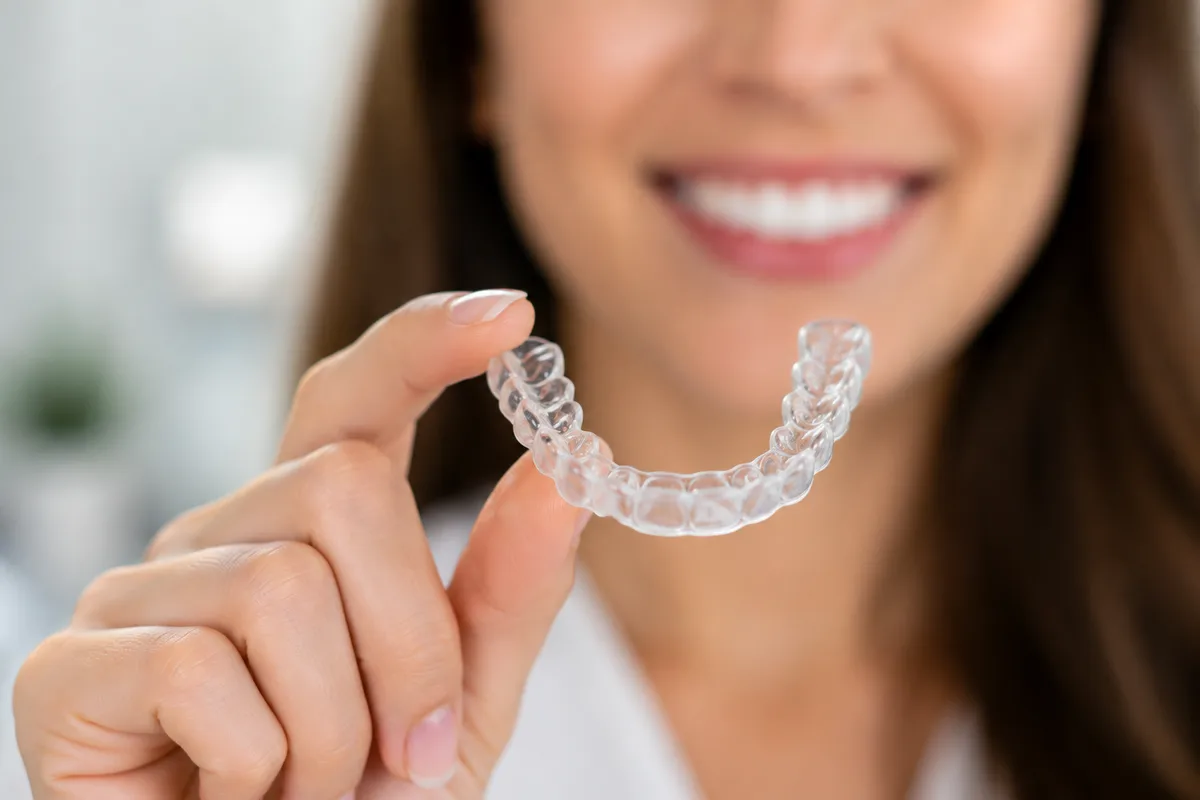
Invisalign® is an orthodontic treatment system developed by Align Technology that uses a sequential series of custom-fabricated, BPA-free thermoplastic aligners to apply controlled biomechanical force to your teeth.
The aligners are manufactured from Align Technology's proprietary SmartTrack® material — a multilayer thermoplastic engineered for consistent force delivery, improved fit, and superior clarity.
Unlike fixed appliances, Invisalign aligners are fully removable. They are worn 20–22 hours per day and changed every 1–2 weeks. They fit flush to the tooth surface and are virtually undetectable.
20–22 hrs
Wear per day
1–2 wks
Per aligner set
12–18 mo
Avg. treatment
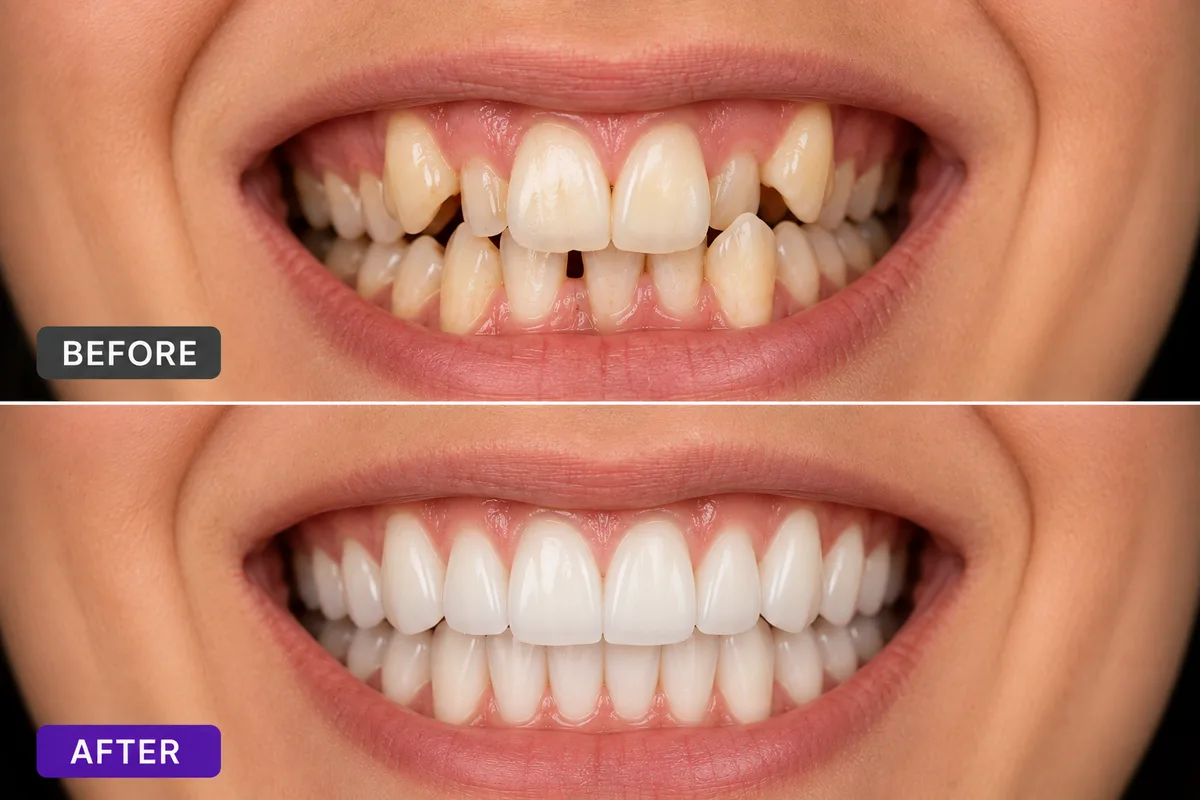
Representative clinical result. Individual outcomes vary based on case complexity and patient compliance.
Clinical Indications
Conditions Invisalign Treats
Invisalign is indicated for a broad spectrum of malocclusion presentations. Below are the six most common conditions treated, along with the underlying clinical rationale.
Crowded Teeth
Insufficient arch space causes teeth to overlap. Invisalign creates space by expanding the arch and repositioning each tooth into its ideal alignment.
Diastema (Gaps Between Teeth)
Spaces between teeth resulting from tooth-size discrepancy or missing teeth. Clear aligners close gaps by moving adjacent teeth together under controlled, graduated force.
Overbite
Upper front teeth excessively overlap the lower front teeth vertically. Invisalign's precision bite ramps and attachments correct the vertical relationship between arches.
Underbite
Lower teeth protrude in front of upper teeth. Aligners reposition the lower arch posteriorly while advancing the upper arch as needed.
Crossbite
One or more upper teeth sit inside the lower teeth when biting. Left untreated, crossbite leads to asymmetric jaw wear and bone loss. Invisalign corrects the transverse relationship.
Open Bite
Upper and lower teeth do not make contact in the front when the mouth is closed. Often associated with parafunctional habits. Invisalign extrudes the anterior teeth to establish proper occlusal contact.
Educational Video
See How Invisalign Works
A short clinical overview of how Invisalign aligners progressively move teeth into their planned positions.
Clinical Workflow
The Invisalign Treatment Process
From the first appointment to the final retained smile, here is every phase of treatment explained clinically.
Comprehensive Consultation & 3D Digital Scan
No physical impressions are taken. An intraoral scanner captures a high-precision digital model of your dentition in minutes. Dr. Abdeen examines the scan alongside photographs and, where indicated, radiographs to assess skeletal and dental relationships and confirm Invisalign candidacy.
ClinCheck® Digital Treatment Simulation
Using Align Technology's proprietary ClinCheck® software, a complete tooth movement sequence is mapped from your current position to the target final occlusion. You will see a simulation of your predicted result before a single aligner is fabricated. Dr. Abdeen reviews and refines the prescription until every movement meets clinical standards.
Fabrication of Custom Aligner Series
Align Technology 3D-prints your complete series of SmartTrack® thermoplastic aligners to tolerances measured in microns. Depending on case complexity, tooth-colored composite attachments — small precision-shaped bumps bonded to specific teeth — may be added to provide additional grip and directional force control.
Active Treatment Phase
Each aligner is worn 20–22 hours per day and advances tooth positions by approximately 0.25 mm per step. You switch to the next aligner in the series every 1–2 weeks per Dr. Abdeen's instructions. Progress appointments every 6–8 weeks allow Dr. Abdeen to confirm teeth are tracking as planned and deliver subsequent aligner batches.
Retention Phase
Upon completing active treatment, custom retainers are fabricated from your final dental position. Consistent retainer wear — typically nightly, long-term — is clinically essential. Without retention, teeth will gradually shift back toward their pre-treatment positions due to periodontal ligament memory and natural aging changes.
Clinical Comparison
Invisalign® vs. Traditional Braces
Both systems move teeth effectively. The differences lie in patient experience, lifestyle impact, and the clinical tools available to the treating doctor.
| Factor | Invisalign® | Traditional Braces |
|---|---|---|
| Visibility | Virtually invisible | Highly visible metal |
| Removability | Fully removable | Fixed — cannot remove |
| Dietary restrictions | None | Avoid hard, sticky, chewy foods |
| Oral hygiene | Normal brushing and flossing | Requires proxy brushes and floss threaders |
| Office visit frequency | Every 6–8 weeks | Every 4–6 weeks |
| Emergency visits | Rare — no broken wires | Possible broken brackets or wires |
| Comfort | Smooth plastic, no mucosal irritation | Wires and brackets may irritate soft tissue |
| Treatment predictability | Digitally simulated before start | Adjusted progressively by clinician |
Note: Traditional braces remain the preferred choice for certain severe skeletal discrepancies. Dr. Abdeen will recommend the most appropriate treatment modality after your clinical examination.
Patient Questions
Frequently Asked Questions
Ready to Start Your Invisalign Journey?
Book a free consultation with Dr. Abdeen. We accept most major insurance plans and offer CareCredit financing options.
Prefer to call?
(703) 671-0626